
Tips and Guidance
Navigating the Senior Living Journey: What Families Wish They Knew Before the Move
By:

When families think about a move to senior living, they often focus on the logistics. The packing. The paperwork. The moving truck.
In reality, the hardest part is usually the decision-making.
A lamp becomes a memory. A box of old photos turns into a two-hour conversation. Even choosing which coffee mug makes the move can feel surprisingly emotional.
For older adults, moving often means sorting through decades of memories while adapting to a completely new chapter of life. For family members, the challenge is finding ways to help without taking over.
The good news is that a smoother transition rarely comes from having the perfect moving plan. It comes from giving your loved one time, maintaining their sense of ownership in the process, and focusing on what matters most.
Start Planning Earlier Than You Think You Need To
Families routinely underestimate how long a senior living move takes.
Packing a two-bedroom home is one thing. Sorting through 30 or 40 years of belongings is something else entirely.
Creating a timeline early helps prevent last-minute decisions and allows your loved one to move at a pace that feels manageable.
Consider building a simple checklist that includes:
- Downsizing and decluttering
- Estate sales, donations, or charitable pickups
- Scheduling movers
- Address changes and account updates
- Moving day logistics
- Apartment setup and unpacking
Having a roadmap can make the process feel less overwhelming for everyone involved.
Downsizing Isn’t About Stuff. It’s About Stories.
One of the biggest surprises families encounter is that downsizing is rarely about deciding what to do with possessions. It’s about deciding what those possessions represent.
A china cabinet might remind someone of holiday dinners. An old recliner may have little monetary value but tremendous personal value.
Research on later-life downsizing has found that decisions about possessions are often tied to identity, memories, and family history, making the process far more complex than simply reducing belongings.
Focus on the Story Before the Decision
Before asking whether something should be kept, ask about its history.
You’ll often learn family stories you’ve never heard before, and your loved one may find it easier to part with an item once those memories have been shared.
Let Your Loved One Lead
Family members naturally want to help, but taking charge of every decision can leave an older adult feeling sidelined.
Whenever possible, let your loved one decide what to keep, donate, sell, or pass along to family members. Even small decisions help preserve a sense of control during a major life transition.
Avoid Making Every Decision About Space
Not every item has to earn its place based on square footage alone.
If there’s room for a favorite chair, family photo collection, or treasured keepsake, those familiar pieces can help a new apartment feel recognizable from the first day.
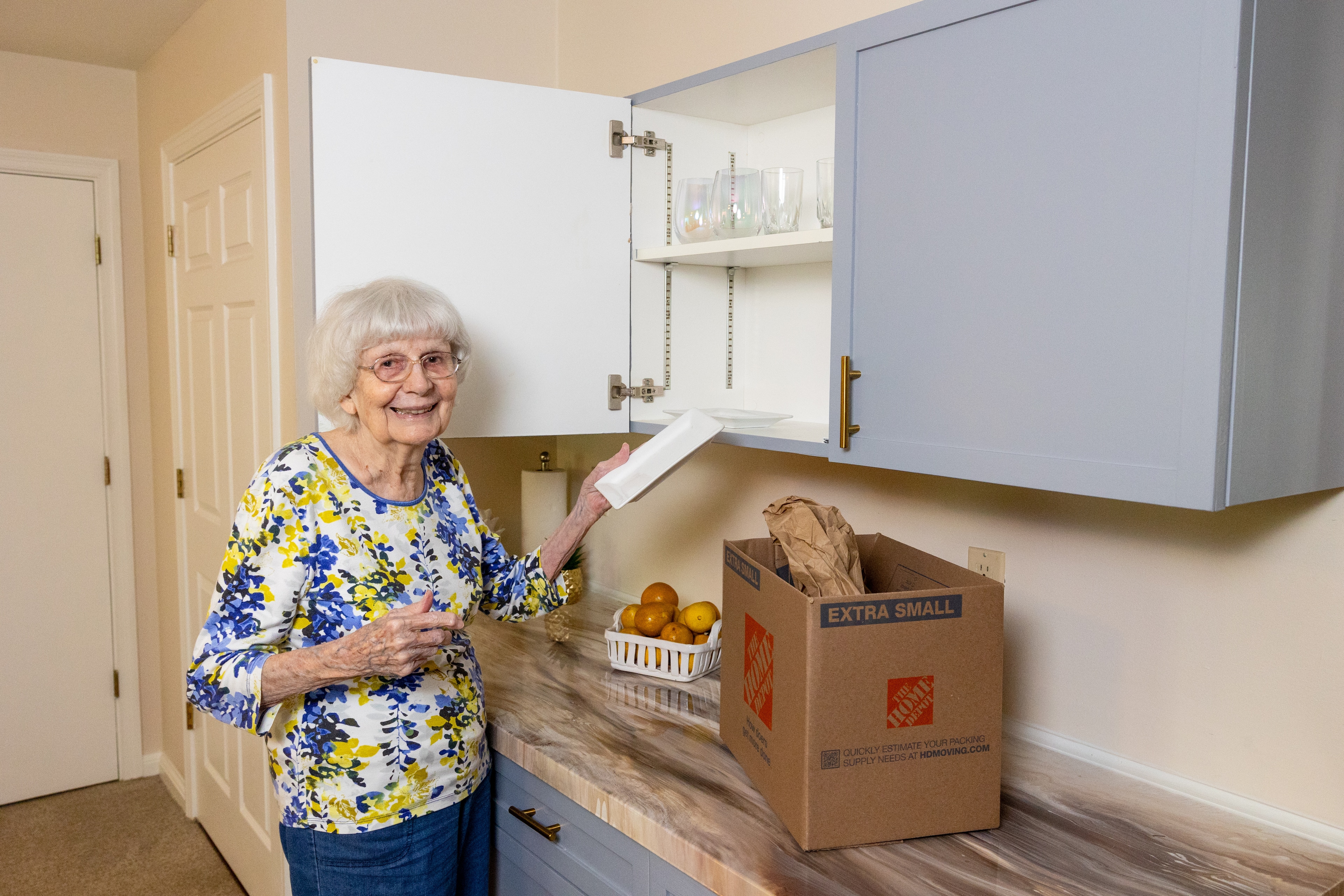
What to Bring to a Senior Living Apartment
Many families worry about bringing too much. Others worry about not bringing enough.
A good rule of thumb is to prioritize the items your loved one uses regularly and the items that feel most personal.
Consider bringing:
- Family photos
- Favorite artwork
- A comfortable chair
- Books and hobbies supplies
- Meaningful keepsakes
- A favorite blanket or quilt
These items often play a bigger role in helping someone settle in than decorative items purchased specifically for the move.
What Most Families Forget to Do Before Moving Day
Even well-organized families tend to focus on packing and overlook smaller details that become headaches later.
Measure Furniture Before the Move
Ask for a floor plan and measure key furniture pieces before moving day. This can prevent unnecessary moving expenses and last-minute decisions.
Pack a First-Day Box
Include essentials such as:
- Medications
- Phone chargers
- Glasses
- Toiletries
- Important documents
- A few changes of clothes
Think of it as packing for a weekend trip. Nobody wants to search through twenty boxes for a toothbrush.
Take Photos of Existing Room Setups
Photographs can make it easier to recreate familiar furniture arrangements and decorations in the new apartment. They can also help when family members are assisting with setup.
Organize Important Documents
Before moving day, gather important paperwork in one secure location, including:
- Insurance documents
- Powers of attorney
- Medical information
- Financial records
- Birth certificates
- Passports
- Wills
Having everything organized beforehand can save time and reduce stress later.

After the Move: Expect an Adjustment Period
Many families expect relief once moving day is over.
Sometimes that’s exactly what happens.
Sometimes a loved one calls three days later and says they’re not sure they made the right decision.
That doesn’t necessarily mean the move was a mistake.
Most major life changes come with a period of adjustment, even positive ones. New routines take time to develop. New faces take time to become familiar.
Resist the Urge to Solve Everything Immediately
If your loved one expresses frustration or sadness, try listening before offering solutions.
Often people simply want acknowledgment that the transition is harder than they expected.
Encourage Exploration at Their Own Pace
Some residents jump into activities and events right away. Others prefer to take their time.
There is no right timeline.
Giving your loved one space to adjust while gently encouraging participation can help them become more comfortable in their new surroundings.
Explore upcoming events and activities at Commonwealth Senior Living through our community activities calendar.
Stay Consistently Involved
A steady stream of calls, visits, and check-ins is usually more helpful than one big burst of support immediately after move-in day.
Many families find that the first few weeks after a move are when their presence matters most.
At Commonwealth Senior Living, families can stay informed and connected through TSOLife, which helps residents, families, and associates stay in touch.
The Goal Isn’t a Perfect Move
The goal isn’t to make the transition completely stress-free. Very few major life changes are.
The goal is to help your loved one feel heard, involved, and supported throughout the process.
They’ll remember who sat beside them as they sorted through old photographs, shared stories, and decided what came next.
If you’re helping a loved one prepare for a move to senior living, our team is here to help. Find the Commonwealth Senior Living community nearest you and connect with a team member for additional guidance and resources.
Frequently Asked Questions
What should I consider when preparing for my loved one’s move to senior living?
Moving to senior living can be a significant transition. It’s important to start planning well in advance, focusing on sorting through belongings and minimizing stress. Creating a detailed checklist can help ensure that nothing is overlooked, making the process smoother for everyone involved.
How can I help my loved one settle in to their new apartment?
Bringing familiar items from home can greatly ease the transition for your loved one. Consider prioritizing personal belongings like family photos, favorite chairs, and meaningful keepsakes that will help create a sense of comfort and familiarity in their new space.
What is the best way to approach downsizing for a senior loved one?
Downsizing should focus on the stories behind possessions rather than just the items themselves. Encourage your loved one to share memories tied to their belongings, and allow them to lead the decision-making process, ensuring they feel in control during this emotional journey.
How can I support my loved one after the move to senior living?
After the move, it’s essential to stay involved through regular calls, visits, and check-ins. This consistent support can help your loved one adjust to their new environment, reassuring them that they are not alone during this transition.
What important documents should I organize before moving day?
Before the move, gather essential documents in one secure location. This includes insurance papers, medical information, financial records, and legal documents like wills and powers of attorney, ensuring everything is readily accessible when needed.